


AI dubbing and subtitles: scale ad localization with voice-preserving dubbing
How performance marketers scale short-form ad localization using AI dubbing and subtitles. Practical workflow, QA checklist, metrics, and GoCrazyAI AI Dubbing steps.
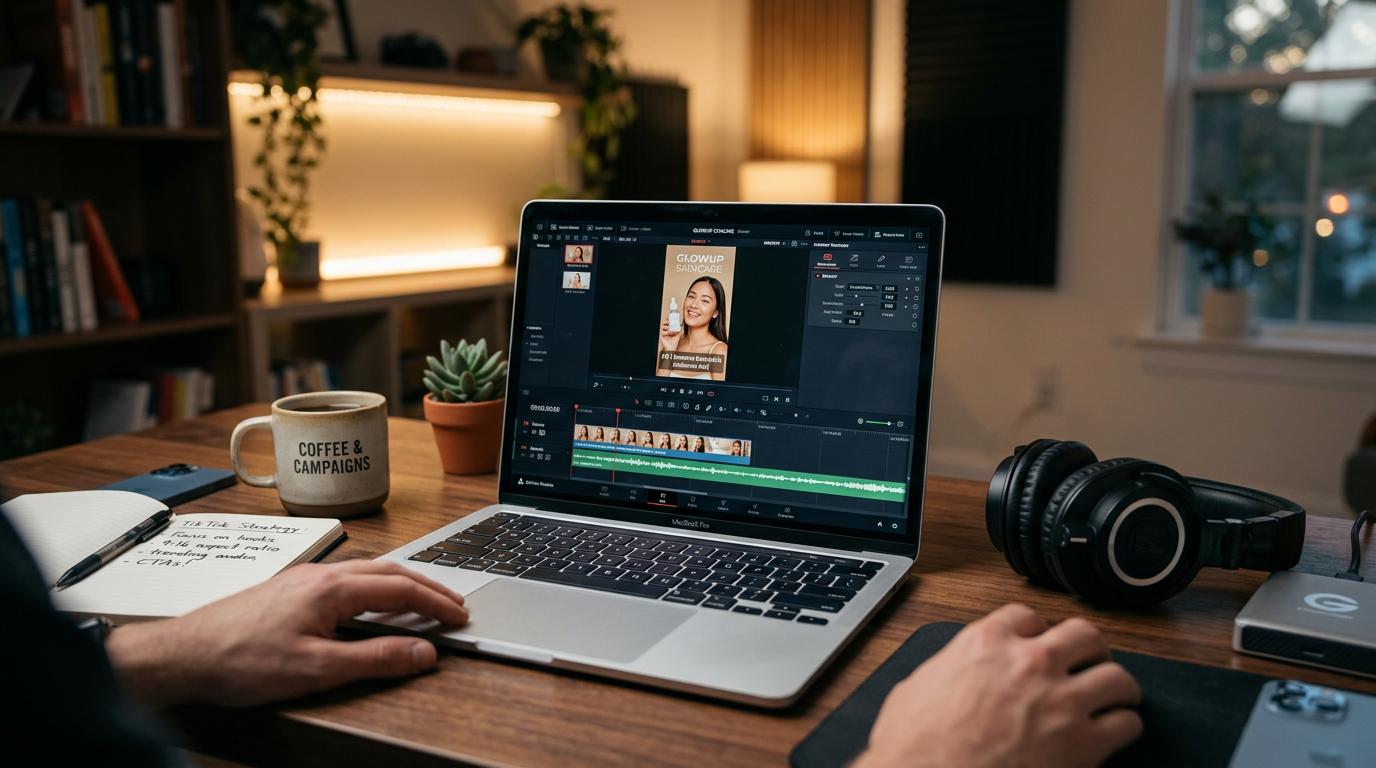
You need more reach from the same short ads without reshooting. This article shows exactly how performance teams can scale localization for TikTok, Reels, and Shorts using AI dubbing (voice-preserving) and when to rely on subtitles instead. You'll get a clear decision framework, a prep checklist to extract scripts and timestamps, a step-by-step GoCrazyAI workflow for batch dubbing, and an optimization and measurement playbook that keeps brand voice and platform policy in check.
Read this if you run creative ops, growth, or media buying and must turn a single creative into dozens of market-ready variants fast and cost-effectively. Examples and prompts below are safe for social ads and can be copied into your pipeline.
Quick Answer
How should you use AI dubbing and subtitles for short-form ads? Use voice-preserving AI dubbing for audience-first markets where audio drives attention and for ads with a strong on-screen speaker. Use subtitles when music, quick cuts, or text-first formats dominate. For scale, combine both: auto-dub primary markets and add localized subtitles for platform accessibility and clarity.
Why voice-first localization outperforms subtitles for short-form ads?
Voice-first localization (preserving speaker tone and timing) usually outperforms subtitling for short-form ads because viewers process audio faster than they can read moving text; this is especially true on small screens and when the on-screen talent drives trust. Studies and vendor tests report that dubbed short-form videos can hold viewers substantially longer than subtitled versions — one industry summary found dubbed shorts held viewers 42% longer in Q1 2025. Platforms like YouTube and others are testing multi-language audio, which points to a preference for localized audio experiences.
Why this matters for paid campaigns: higher watch time typically improves algorithmic delivery and lowers CPV/CPM over time. For speaker-led ads (host reads, testimonials, product demos), preserving tone and emphasis makes the message feel authentic, which tends to lift engagement and CTR versus robotic TTS or untranslated audio. That said, voice-first localization isn't always the right tool — the next section explains when to choose dubbing vs subtitles.
Practical note: voice-preserving dubbing can keep brand persona intact across languages, but it works best when the localization adapts phrasing and CTAs to local idioms rather than doing a word-for-word translation.
When to choose AI dubbing vs. subtitles: cost, speed, and market fit?
AI dubbing wins when the ad relies on spoken persuasion, speaker charisma, or emotional tone. It usually costs less and scales faster than reshoots: vendors report localized variants can be produced in hours per language instead of days or weeks for a full reshoot. Choose dubbing when your funnel key metric depends on watch time or when the creative features a single identifiable speaker whose voice helps convert.
Subtitles are preferable when ads are highly visual or text-driven (fast-cuts, kinetic typography, or music-first creatives) and where viewers typically mute sound. Subtitles are also faster to QA and cheaper if you only need coverage for many minor markets. A hybrid approach often works best: auto-dub top-priority markets and add localized subtitles across all variants for accessibility and clarity.
Cost and speed comparison (practical rules of thumb):
- Speed: AI dubbing + review = hours; reshoot = days-to-weeks.
- Cost: AI dubbing licensing + reviewer = fractional cost of reshoot and travel.
- Market fit: prioritize dubbing for markets with high audio consumption or where language trust matters.
Remember to budget human-in-the-loop checks (linguistic + compliance) — automated dubbing reduces hours but not the need for final review.
Proof points: engagement and ROI data for dubbed vs. subtitled/local-language ads?
Industry data and academic research generally show doubled engagement benefits for voice-preserving dubbing versus untranslated audio and notable gains over subtitles in many short-form contexts. A 2025 industry summary reported a 42% longer hold time on dubbed short-form videos in Q1 2025. Academic studies also indicate that preserving speaker characteristics — tone, pitch, emotions — improves perceived authenticity and viewer response compared with flat TTS.
Platform momentum matters for ROI: YouTube and other platforms have rolled out experiments supporting multi-language audio, which lowers friction for localized creative and may improve delivery efficiency. Case studies from localization vendors show that converting an existing short creative into multiple languages via AI dubbing often lowers production time and cost dramatically, helping teams test and iterate across markets faster.
How this translates to ROI: better watch time usually improves algorithmic placement and CPMs; improved authenticity lifts CTR and reduces CPA in many advertisers' internal tests. Still, every creative and market behaves differently — run controlled A/B tests to quantify impact on your KPIs before full rollout.
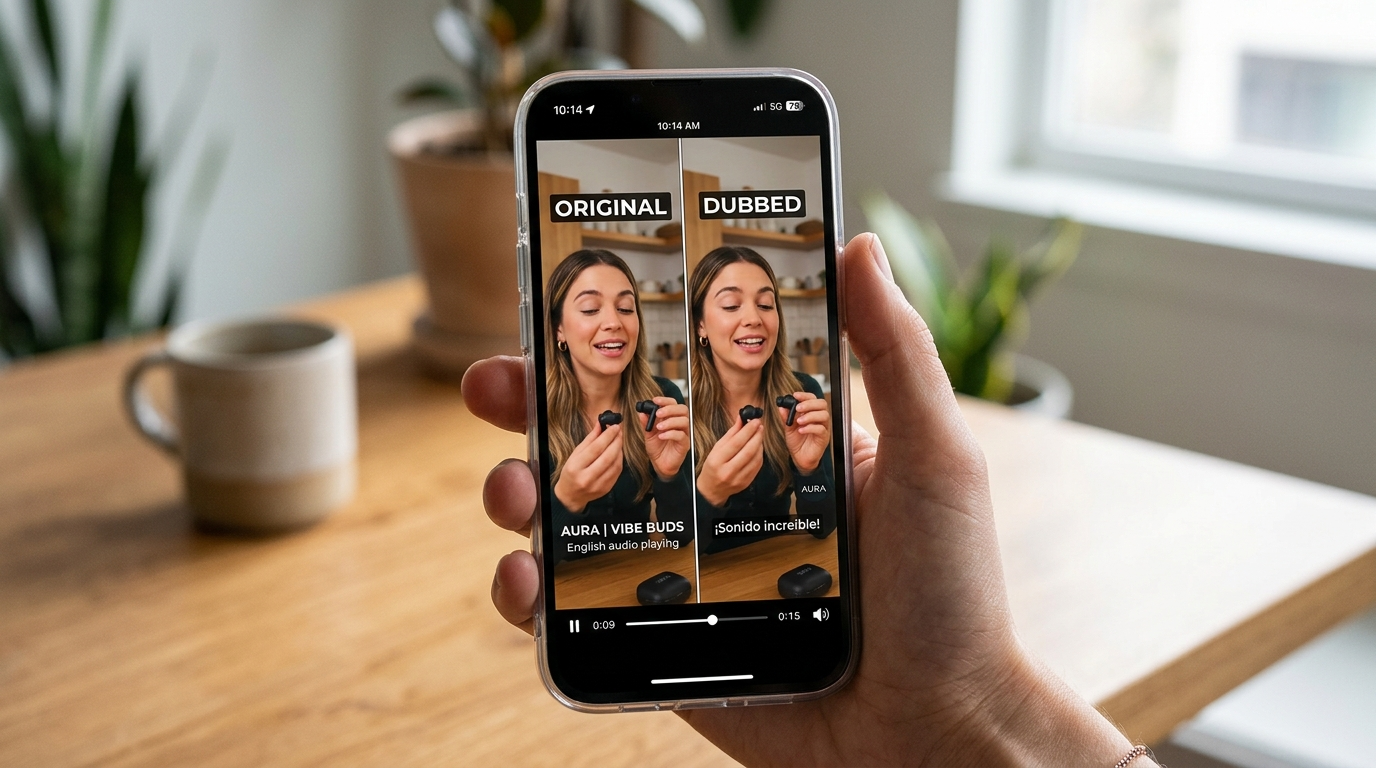
Prep work: extracting scripts, timestamps, and creative hooks for efficient dubbing — examples?
To localize fast, extract a clean script, exact timestamps, and the creative’s emotional hooks before you send anything to an AI dubbing tool. This prep reduces revision cycles and speeds human review. A minimal prep pack for each ad should include: a verbatim transcript, source language timecodes aligned to frames, target landing page URL and CTA text, and notes on tone (e.g., "urgent", "friendly", "wry").
Example extract you can copy for a 15s TikTok ad: "00:00 - 00:02: [On-screen: product shot] VO: 'Sick of slow chargers?' 00:02 - 00:06: [Demo close-up] VO: 'ChargeX gets you 80% in 20 minutes.' 00:06 - 00:10: [Customer smiling] VO: 'Plug in and go.' 00:10 - 00:15: [CTA screen] VO: 'Shop now and save 15% with code FAST.'"
Prompt examples for translators/localizers (safe domains):
- "Localize this hook for Germany, keep urgency, adapt CTA to local promo norms."
- "Translate conversationally for Spain, keep length under 13 seconds spoken."
Practical tips: always provide character or syllable limits for the target language and flag culturally sensitive phrases. This avoids literal translations that break pacing or violate local idioms.
Step-by-step workflow — Create localized ad variants at scale with GoCrazyAI AI Dubbing
Short answer: upload or paste your TikTok/YouTube URL, auto-translate into target languages, preserve the original voice tone, review with a linguist, and export. GoCrazyAI AI Dubbing automates the core steps and supports 30+ target languages while preserving speaker voice characteristics, which speeds up producing market-ready variants.
Detailed steps on GoCrazyAI AI Dubbing: 1) Prepare the source clip and transcript. Use timecodes from your prep pack. 2) On GoCrazyAI, choose AI Dubbing (/ai-dubbing). Upload the MP4 or paste the TikTok/YouTube URL. 3) Select target languages (up to 30+ supported) and enable "preserve speaker voice" so the voice characteristics carry over. 4) Auto-translate. The system returns synced audio tracks and rough subtitles. 5) Review: assign a linguistic reviewer for each language to check idioms, CTAs, and compliance. Edit text or re-record small sections if needed. 6) Export per-platform formats (vertical for TikTok/Reels, 9:16) and include localized subtitles files if required.
When to involve other GoCrazyAI features: use AI Voices (/ai-voice) if you need a custom clone or to adjust voice character; use AI Video Editor (/ai-video-edit) to add localized overlays or subtitle burns. For budgeting and credits, check pricing on the GoCrazyAI credits page (/credits).
This workflow reduces iteration time: many teams move from source-to-first-language within hours and scale to additional languages in parallel instead of sequential reshoots.

Optimization checklist — QA, cultural adaptation, CTAs, and platform pitfalls?
Start with a 5-point QA checklist: audio sync, voice authenticity, idiom fit, CTA accuracy, and policy compliance. Each check catches common failure modes that cost conversions or cause policy flags.
Common QA items and fixes:
- Audio sync: confirm mouth beats align within ±150ms for on-screen talent; if not, re-time or shorten target lines.
- Voice authenticity: check preserved voice for unnatural prosody; toggle voice-preservation settings or use an AI-voice clone for better fit.
- Idiom and CTA adaptation: replace literal phrases with local equivalents and verify promo codes and URLs resolve in the market.
- Subtitles accuracy: ensure burn-in subtitles match the dubbed copy and follow platform reading speed norms.
- Policy checklist: confirm claims and landing pages meet TikTok ad policy for the target market to avoid disapprovals.
Operational tips: keep a short style guide per language (tone, forbidden terms, legal disclaimers) and automate a checklist in your review workflow. Use human reviewers for the final pass — automation speeds production but human checks prevent brand and compliance risk.
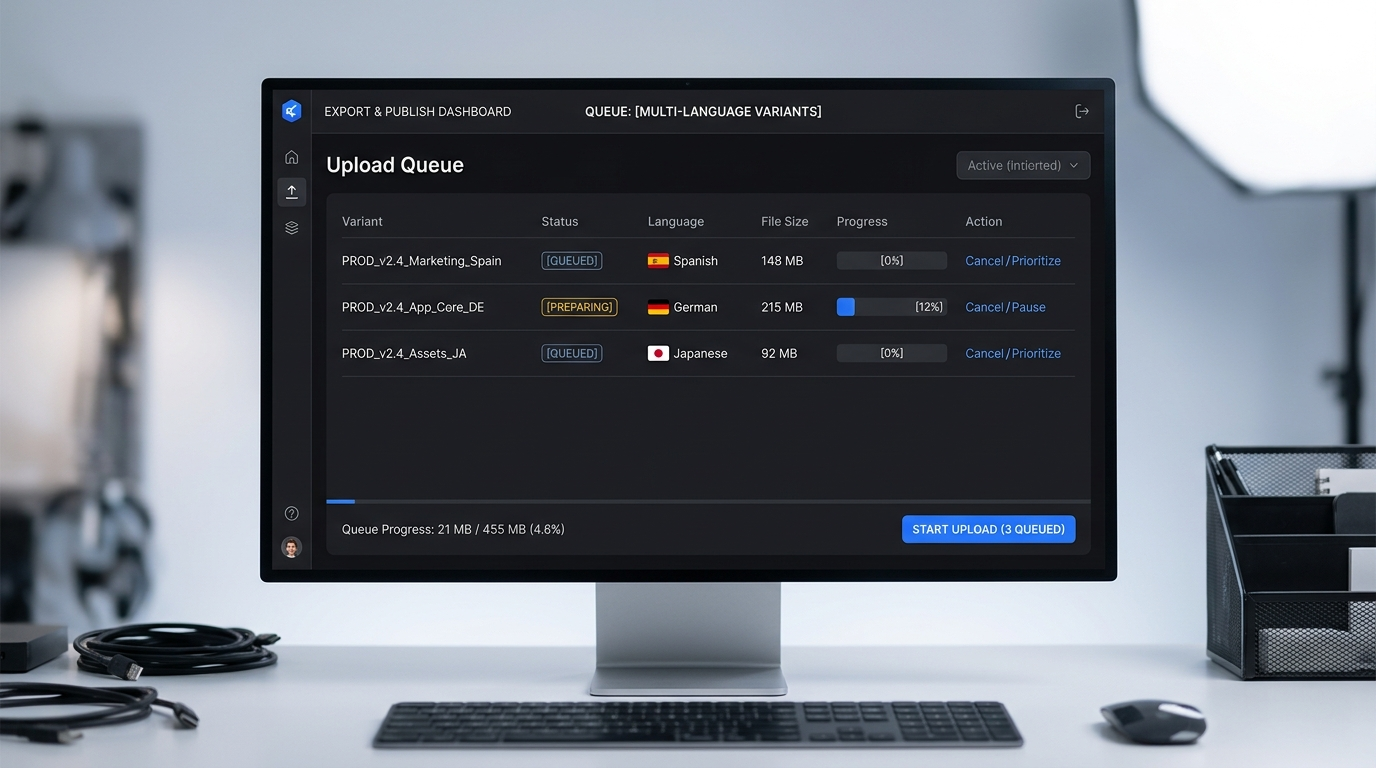
Measuring success: metrics, A/B tests, and how to structure ad groups per market?
Measure dubbed vs subtitled variants with the same KPI framework you use for other experiments: view-through rate (VTR), average watch time, CTR, CPC/CPM, and CPA. For short-form ads, average watch time and early drop-off (0–3s) are especially telling. Run A/B tests with a small traffic split and hold creatives constant except for the audio/subtitle treatment.
Suggested A/B setup:
- Control: original language with subtitles.
- Variant A: localized AI dubbing (voice-preserving).
- Variant B: localized subtitles only.
Run tests for at least one funnel step (e.g., clicks to landing) and monitor watch time uplift. Structure ad groups by language and creative version so the platform optimizes delivery to the right audience. If budget allows, run a second test where you also localize the landing page to measure full-funnel impact — TikTok and other platforms may penalize mismatched language experience, which affects conversion.
Decision rule of thumb: if dubbed variants lift average watch time by 15–25% and improve CTR/CPA materially in top markets, scale dubbing there first and keep subtitles for tail markets.
Scaling playbook: from pilot to 30+ languages, operations, and governance?
Start with a focused pilot across 3–5 markets that cover a mix of high-volume and culturally different regions. Use GoCrazyAI AI Dubbing to deliver the pilot variants quickly, then measure watch time, CTR, and CPA. If results justify scaling, create playbooks for localization, approval SLA (e.g., 24–48 hours per language review), and a cost model that includes reviewer time and platform spend.
Operational checklist for scale:
- Centralize source assets and transcripts in a shared repo.
- Maintain a language style guide and designation of in-market reviewers.
- Batch process groups of languages on the dubbing tool and queue human review in parallel.
- Track credits and spend; reference GoCrazyAI pricing (/credits) when forecasting your localization budget.
- Governance: require an accessibility and compliance check before any variant goes live.
At scale, many teams reserve AI dubbing for top 20–30 languages and use automated subtitles for long-tail markets. Keep a rolling audit of in-market performance and rotate creative refreshes based on decay. Finally, treat localization as an iterative experiment — local creative swaps (hook changes and CTAs) often outperform literal translations, so test adapted hooks early and often.
Frequently Asked Questions
Does AI dubbing replace human voice actors?
Not completely. AI dubbing speeds up volume and preserves voice character, but human review and occasional human re-records remain important for brand-sensitive spots and legal phrasing.
How many languages can GoCrazyAI AI Dubbing handle?
GoCrazyAI supports 30+ target languages for auto-translation and dubbing while preserving the speaker’s voice tone.
Will AI dubbing break platform policies?
Automated audio itself won’t break policies, but mismatched claims, untranslated landing pages, or localized CTAs can trigger disapproval — always review ad policy for the target market and check landing pages.
Conclusion
AI dubbing with human-in-the-loop review is a practical way to scale short-form ad localization: faster, cheaper than reshoots, and often better for watch time than subtitles alone. Start with a small pilot, prioritize markets by impact, and require a linguistic + compliance pass before publishing. Drop a clip into GoCrazyAI AI Dubbing (/ai-dubbing) and ship localized versions quickly while keeping your brand voice intact.
Sources
- Why Media Companies Are Betting Big on AI Localization — Dubbing Journal (summary citing Grand View Research)dubbingjournal.com ↗
- How to Use AI Dubbing to Instantly Localize Your TikToks in 7 Languages — TokPortal (industry post citing AdVerge data)tokportal.com ↗
- Breaking the Sound Barrier: Asymmetric Impacts of AI Dubbing on Multilingual Engagement on YouTube — SSRN (study referencing YouTube rollout)papers.ssrn.com ↗
- Dubbing in Practice: A Large Scale Study of Human Localization With Insights for Automatic Dubbing — arXivarxiv.org ↗
- How to Translate TikTok Ad Copy (And Actually Localize It) — Coinis (practical guidance on when built-in platform translation falls short)coinis.com ↗
- Ad Format and Functionality — TikTok Advertising Policiesads.tiktok.com ↗
- Translate E-Commerce Video Ads Without Reshooting — Vozo.ai (vendor guide on scaling ad localization)vozo.ai ↗
- How to Translate TikTok Ads into 5+ Languages — GeckoDub blog (case examples and performance claims)blog.geckodub.com ↗