


AI video localization: How creators can scale reach with voice-preserving dubbing
A hands-on playbook for creators to translate and dub videos with voice-preserving AI. Workflows, mistakes, GoCrazyAI steps, and growth experiments.
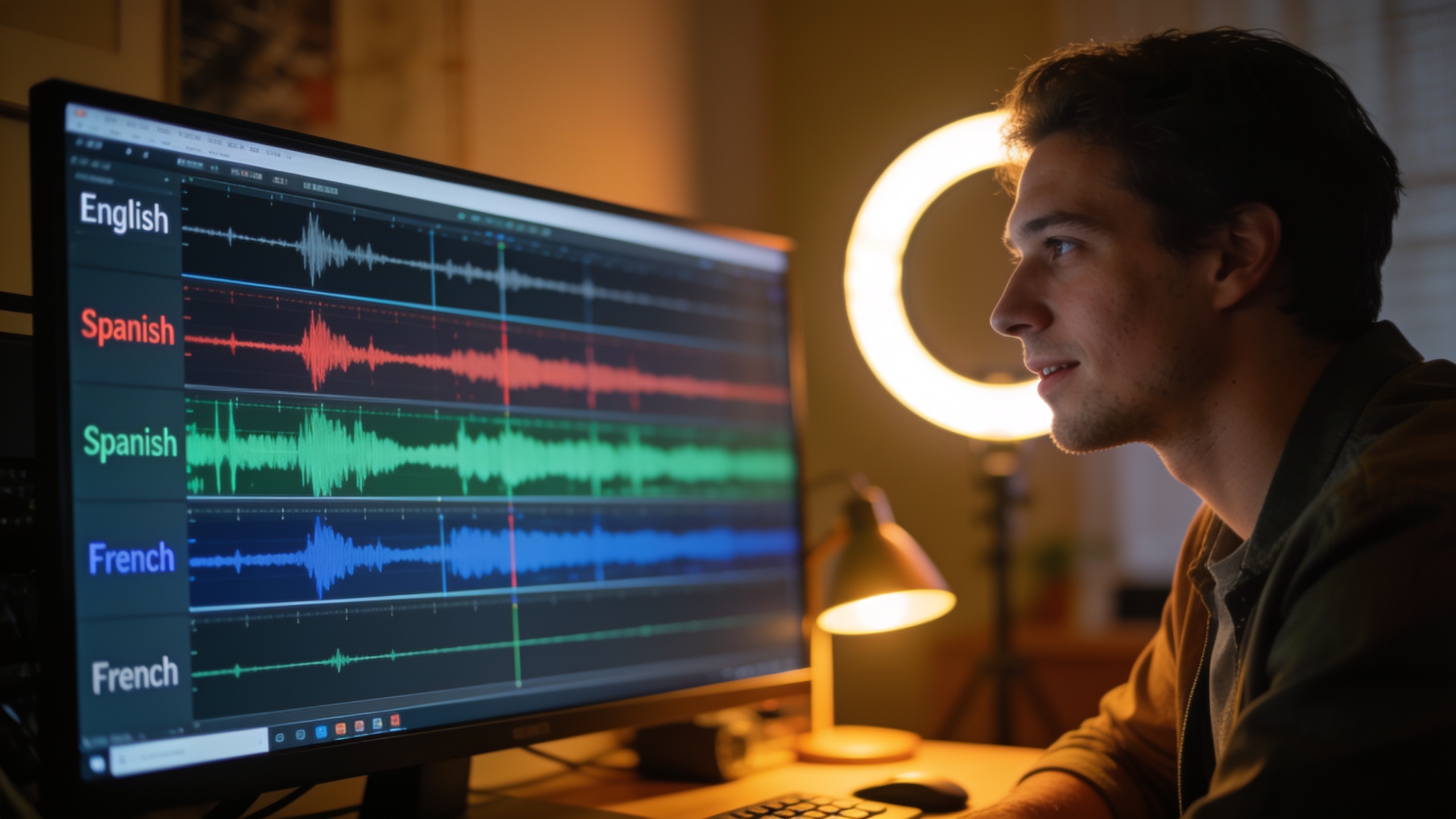
You want one video to reach viewers in multiple languages, but translating and dubbing while keeping your voice and tone feels slow and expensive. This article shows a practical, creator-focused playbook for translating, dubbing, and scaling videos using voice-preserving AI. You’ll get data that proves localization moves the needle, a clear ASR→MT→voice conversion workflow, hands-on GoCrazyAI steps for Spanish and European markets, and a checklist for quality checks and distribution.
Quick Answer
AI video localization means translating a video's speech and replacing the audio with a natural-sounding version in another language. Creators typically run ASR, edit the transcript, translate with human-in-the-loop checks, then synthesize audio that preserves the original voice and prosody. Tools like GoCrazyAI AI Dubbing automate that flow and support 30+ languages while keeping the speaker’s tone.
Why does localization multiply audience, and what do the data say?
Localized videos usually boost reach because they remove language friction and match regional search behavior. Industry research estimated the global media localization market at roughly $4.8 billion in 2025, with AI-driven solutions the fastest-growing segment (DataIntelo)[https://dataintelo.com/report/media-localization-market]. Creator-platform studies from 2025–2026 also show that localized videos can produce notable uplift—some analyses report up to ~40% higher engagement for localized versions (Kapwing)[https://www.kapwing.com/resources/video-translation-statistics-how-many-creators-localize-their-content-in-2026/].
Beyond raw numbers, platform moves matter: YouTube and major streamers began piloting multi-language audio and AI-assisted dubs around 2024–2025, which signals platform-level acceptance. For creators this means localized uploads can reach non-native audiences via search, recommended feeds, and language-specific playlists. For marketing teams, localized metadata and language-specific thumbnails often increase click-through rates in target markets. The practical takeaway: prioritize markets where you already see organic traction, and use small experiments to test which languages give the strongest ROI before full-scale localization.
Dubbing vs. subtitles vs. hybrid: which localization strategy wins for your goals?
For most creators, the right localization strategy depends on format, budget, and audience behavior. Subtitles are cheap and quick, and they preserve the original audio—good for audiences used to subtitles (e.g., some documentary and indie viewers). Dubbing replaces the audio and usually drives higher watch-time and broader audience reach when viewers prefer native-language audio. Hybrids pair a translated dub with optional subtitles for accessibility and SEO.
If your priority is fast international discovery (ads, new markets, playlists), dubbed audio with localized metadata often performs best. For short-form content (TikTok, Reels), experiments often find that native-language audio increases retention on autoplay. For long-form educational or brand-critical content, hybrid workflows (human-edited translation + voice-preserving dub + captions) hit the balance between authenticity and accessibility.
Budget decision rule: run subtitle-only tests in 1–2 languages first. If you see >20% watch-time lift, move to voice-preserving dubbing for the highest-impact pieces. Use voice-preserving dubbing when speaker identity and tone matter for brand trust or personality-driven channels.
What ‘preserving voice characteristics’ really means (tech primer for creators)
Preserving voice characteristics generally means keeping a speaker’s timbre, pitch range, and expressive patterns while generating audio in another language. Technically this uses voice conversion and voice-cloning methods combined with prosodic alignment: the system maps the source voice identity onto target-language speech while attempting to match intonation and phrasing.
State-of-the-art methods use retrieval-based voice conversion, prosodic phrase alignment, and identity-preserving VC research to maintain speaker traits (see RVC and prosodic alignment literature)[https://en.wikipedia.org/wiki/Retrieval-based_Voice_Conversion, https://arxiv.org/abs/1908.07226]. These techniques let the synthesized voice sound recognizably like the creator even when the words change. Limitations: extreme vocal effects, heavy overlapping speech, or highly improvisational cadence can reduce fidelity. Also, preserving voice doesn’t magically change lip movements; true camera-angle changes or radical performance edits often need human re-records or more advanced mouth-warping models.
For creators, the practical implication is that voice-preserving dubbing usually maintains personality and tone, but you should still validate intonation on a per-clip basis and adjust translations so pauses and emphases match the original intent.
Common pitfalls in automated dubbing and how to avoid them
Automated dubbing commonly fails when teams treat it as fully hands-off. Three frequent mistakes and how to avoid them:
- Mistake: Relying on raw machine translation for idioms and CTAs. How to avoid: Pre-edit or post-edit translations for idiomatic meaning, local references, and CTAs—the same CTA that works in English may flop in other markets.
- Mistake: Skipping prosodic or timing alignment checks. How to avoid: Verify phrase-level timing and adjust pause placement so the dub doesn’t sound rushed or clipped. Use tools that support phrase alignment and visual waveform editing.
- Mistake: Ignoring voice identity artifacts. How to avoid: Run short quality checks to ensure voice-preservation is consistent across ranges; add alternate takes or human fixes for clips where the synthetic voice sounds unnatural.
- Mistake: Treating captions as optional for SEO. How to avoid: Always upload translated captions to help indexing and accessibility.
- Mistake: Scaling without testing CTAs and hooks in short-form. How to avoid: A/B test localized hooks on TikTok/Reels before localizing full episodes—short-form pacing is sensitive to translation length.
Following these steps keeps automated dubbing efficient while preventing common quality regressions.
Workflow: From original video to translated script — best practices for accuracy and tone
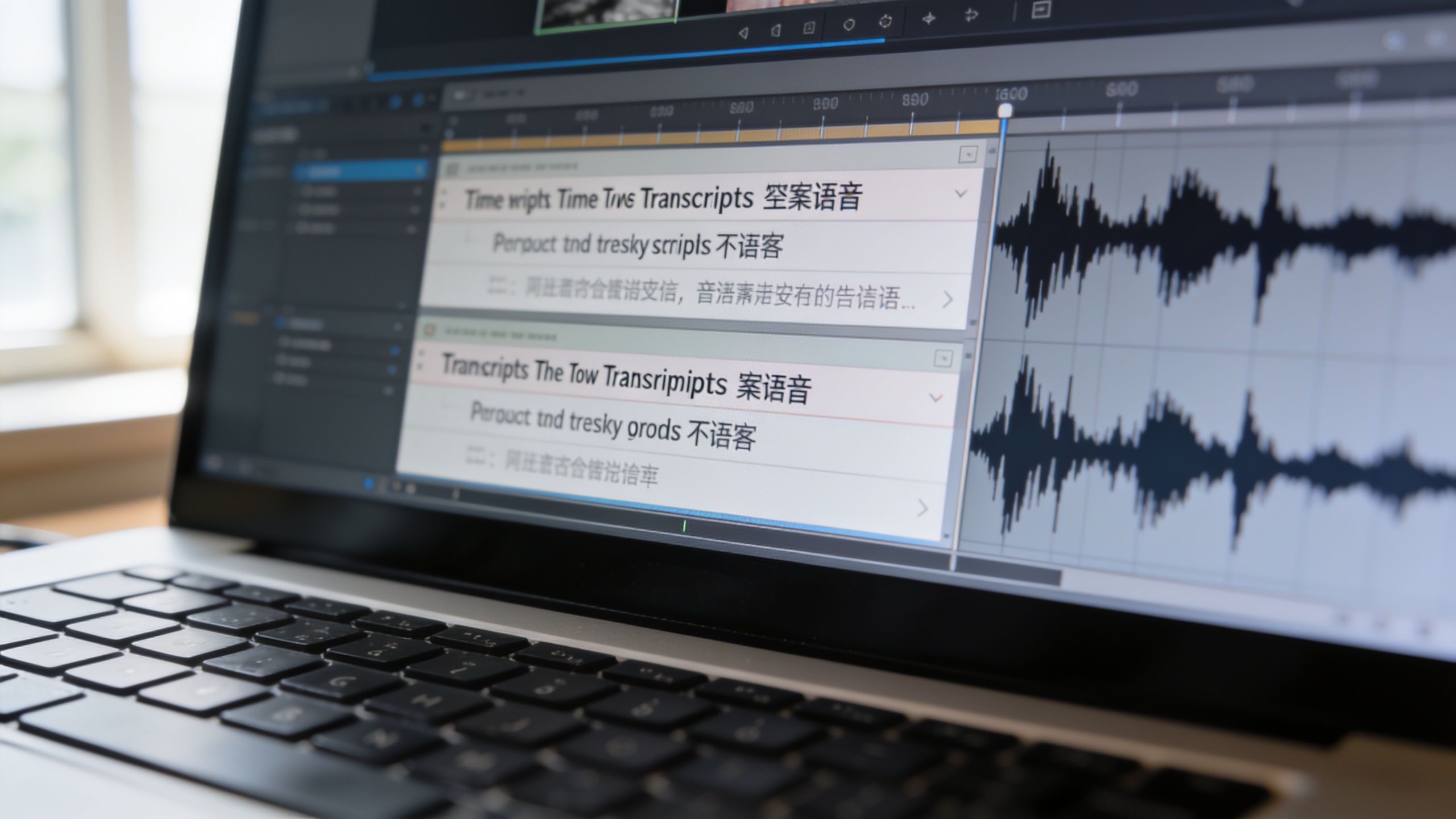
A reliable localization workflow uses automated steps plus light human checks. The usual pipeline: ASR → transcript pre-edit → machine translation (MT) with pre-edit rules → human post-edit for idioms and CTAs → voice conversion/TTS with prosodic alignment → lip-sync/timing adjustments → final QC.
Best-practice details:
- ASR: Use high-quality ASR and correct names, jargon, and timestamps. For noisy source audio, clean or re-record if possible.
- Transcript pre-edit: Normalize filler words and mark emphases or timing cues for the translator. This helps maintain natural prosody in the target language.
- MT + pre-edit rules: Provide MT with glosses for brand terms and measurements. For CTAs, provide preferred local phrasing.
- Post-edit: A native reviewer should check idioms, brand voice, and legal phrasing. For high-stakes lines (safety, medical, legal), always use professional translation.
- Voice conversion/TTS: Pick a voice-preserving model and test 10–30 second clips across pitch ranges. Adjust prosody constraints so questions, exclamations, and pauses feel natural.
- Lip-sync/timing: For on-camera talent, align phrase boundaries to mouth movement where believable; for short-form, prioritize pacing over perfect lip sync.
- Export: Deliver localized audio stems, subtitles, and translated metadata (title, description, tags) for each language.
This hybrid pipeline keeps turnaround fast while avoiding the key technical failure points.
Hands-on: Using GoCrazyAI AI Dubbing to translate and dub a YouTube video into Spanish (step-by-step)
GoCrazyAI AI Dubbing automates ASR → MT → voice-preserving dubbing for 30+ languages and accepts YouTube URLs or uploads. To dub a YouTube video into Spanish: start by uploading the source or pasting the YouTube URL into GoCrazyAI AI Dubbing, select Spanish as the target language, and choose the voice-preservation option to retain your speaker characteristics.
Step-by-step on the site:
- Upload or paste the YouTube video URL into the AI Dubbing tool.
- Let the platform run ASR and generate a timestamped transcript.
- Review and pre-edit the transcript inline—fix names, jargon, and CTAs.
- Select Spanish and a voice-preserving model; toggle the intensity of voice identity preservation if available.
- Review the generated Spanish audio preview, check phrase timing, and use the timeline editor to shift phrases by small amounts if any lines feel rushed.
- Export the Spanish audio track and burn-in or sidecar subtitles as needed. Also export translated title and description for upload.
Using GoCrazyAI AI Dubbing is a fast path from single video to localized version for creators who need consistent voice tone across languages. For voices and cloning options, check GoCrazyAI’s AI Voices library to fine-tune or clone a custom voice if you need tighter identity control (/ai-voice). For pricing and credits that affect large-scale runs, see GoCrazyAI Pricing (/credits).
You can try every step above directly in GoCrazyAI AI Dubbing — no setup needed.
Hands-on example: Localizing a TikTok hook for multiple European markets with GoCrazyAI?
Short answer: localize hooks and CTAs separately, keep pacing tighter, and swap cultural references. For TikTok hooks, length and rhythm are everything—translate literal meaning only when the translated phrase fits the same beat. Use GoCrazyAI to batch-create short localized takes and test them as separate uploads.
Practical tips:
- Keep the hook under the same syllable count when possible. If the translated line is longer, tighten the music or trim filler.
- Localize CTAs: "Link in bio" may be fine, but some markets prefer "checka länken" or equivalents—ask a native reviewer.
- Lip-sync and pacing: For two-second hooks, prioritize timing. Use the timeline editor to nudge audio by 50–200 ms to match mouth movement and musical beats.
- Batch workflow: Create one source clip, generate 5–8 target languages with GoCrazyAI, and export them as separate short files for A/B testing.
Prompt examples to feed into a human translator or MT pre-edit stage:
"Keep hook under 6 syllables. Tone: urgent, playful. Replace US cultural references with local alternatives. CTA: keep action verb 'watch' or 'follow'."
"Translate CTA ‘subscribe for more tips’ to informal Spanish: ‘suscríbete para más tips’—keep tone friendly, not formal."
These micro-experiments reveal which markets respond to your voice-preserving audio and which need localized creative edits before full-scale channel launches. When you want to add localized music or quick sound design, consider GoCrazyAI AI Song Generator for region-appropriate backing tracks (/ai-music).
Review & quality-check checklist: how to compare AI-dubbed versions and when to call in human review?
A quick, repeatable QC checklist helps you release confident localized videos. Use automated checks first, then sample human review for risk lines.
QC checklist (run for each language):
- Listen test: 30–60s spot-check in quiet headphones. Does the voice sound consistent across pitch ranges? Any artifacts?
- Timing check: Are critical beats, punchlines, and CTAs aligned within 100–200 ms? For short-form, aim for tighter alignment.
- Accuracy check: Compare translated captions against the transcript. Do idioms or brand terms change meaning?
- Brand voice check: Does the delivery match the original tone (friendly, authoritative, comedic)?
- Accessibility check: Are captions accurate and time-synced?
- Metadata check: Is the title, description, and tags localized and SEO-friendly for the target market?
When to bring humans in:
- High-stakes lines (legal, medical, sponsorships).
- Clips with heavy improvisation or slang that MT struggles with.
- When voice-preservation artifacts persist after model adjustments.
A typical release flow: automated pass → native reviewer spot-check for top 10% priority markets → full human review for highest-value videos. This keeps costs down while preventing public errors.
Distribution, measurement, and scaling: release cadence, metadata, and growth experiments for multilingual channels
Distribution and measurement decide whether localization pays off. For scalable growth, sequence launches and use data to guide where you invest deeper localization.
Suggested cadence:
- Phase 1: Subtitle tests in 2–3 languages for new uploads.
- Phase 2: If watch-time or CTR lifts >15–20%, produce a dubbed version for those languages.
- Phase 3: Localize metadata and thumbnails, then run paid promotion in the top-performing markets.
Measurement signals to track per language: view growth, average view duration, watch percentage, CTR on thumbnails, and subscriber lift. Also monitor comment sentiment for voice authenticity. Use small experiments to test different localized CTAs and thumbnails—scale the winner.
Scaling tactics:
- Create language-specific playlists and localized channel sections.
- Batch localize evergreen content first; time-sensitive pieces later.
- Use localized upload schedules that match target audience peak hours.
If you plan to scale fast, map costs to expected viewer lift. For many creators, GoCrazyAI AI Dubbing (30+ languages) speeds iteration so you can run these experiments without heavy recording sessions. For post-production and adding subtitles or overlays after dubbing, GoCrazyAI Media Mixer and AI Video Editor offer one-click export options (/ai-video-edit).
Frequently Asked Questions
How accurate is AI dubbing compared with human dubbing?
AI dubbing has improved rapidly and is often sufficient for broad-reach content, especially when voice identity matters. However, human dubbing still outperforms AI for nuanced performance, complex idioms, and brand-critical messaging. Best practice is a hybrid: automated pass plus human review for high-stakes lines.
Which languages should I prioritize first for localization?
Prioritize markets where you already get organic traction or where your niche has a known audience. Common high-return languages for many creators include Spanish, Portuguese, French, German, and Japanese. Run subtitle tests first to identify actual demand before investing in dubbing.
Can AI preserve my exact voice when dubbing into another language?
Modern voice‑conversion models can preserve many voice characteristics (timbre, pitch tendencies, expressive patterns), but exact replication isn’t guaranteed across all phonetic ranges. Always run short tests across the full pitch range and adjust settings or use human fixes for critical clips.
How much human effort is required per video?
For standard creator workflows, expect 10–30 minutes for transcript pre-edit and a short review of the generated audio. High-stakes or very long-form content may need several hours of translation and post-editing. The hybrid approach keeps ongoing costs low while maintaining quality.
Conclusion
Final thoughts: AI video localization lets creators multiply reach quickly, but it works best when paired with careful pre-editing, targeted experiments on short-form hooks, and a short human QA loop. Start small—test subtitles, then scale to voice-preserving dubbing for languages that show real engagement gains. Drop a clip into AI Dubbing and ship localized versions before lunch.
Sources
- Media Localization Market Research Report 2025 — DataIntelodataintelo.com ↗
- Why Media Companies Are Betting Big on AI Localization — Dubbing Journal (article referencing market and trends)dubbingjournal.com ↗
- Video Translation Statistics — Kapwing (2026 roundup on localization and engagement)kapwing.com ↗
- Identity‑Preserving Video Dubbing Using Motion Warping — paper summary (research demonstrating identity preservation / lip-sync approaches)huggingface.co ↗
- Prosodic Phrase Alignment for Machine Dubbing — arXiv (technical work on prosody for machine dubbing)arxiv.org ↗
- Best AI Dubbing Software for Businesses in 2025 — Veed (market tools roundup)veed.io ↗
- Best AI Dubbing Platforms in 2025 — Listnr AI rounduplistnr.ai ↗
- Retrieval-based Voice Conversion — RVC (overview of an open-source VC approach used in modern voice preservation)en.wikipedia.org ↗
- Rethinking dubbing workflows: The tentative role of pre-editing in machine-translated content — academic article (guidance on MT pre-editing for dubbing)periodicos.ufsc.br ↗