


Friday-Ready Songs
Shabbat Songs for Kids
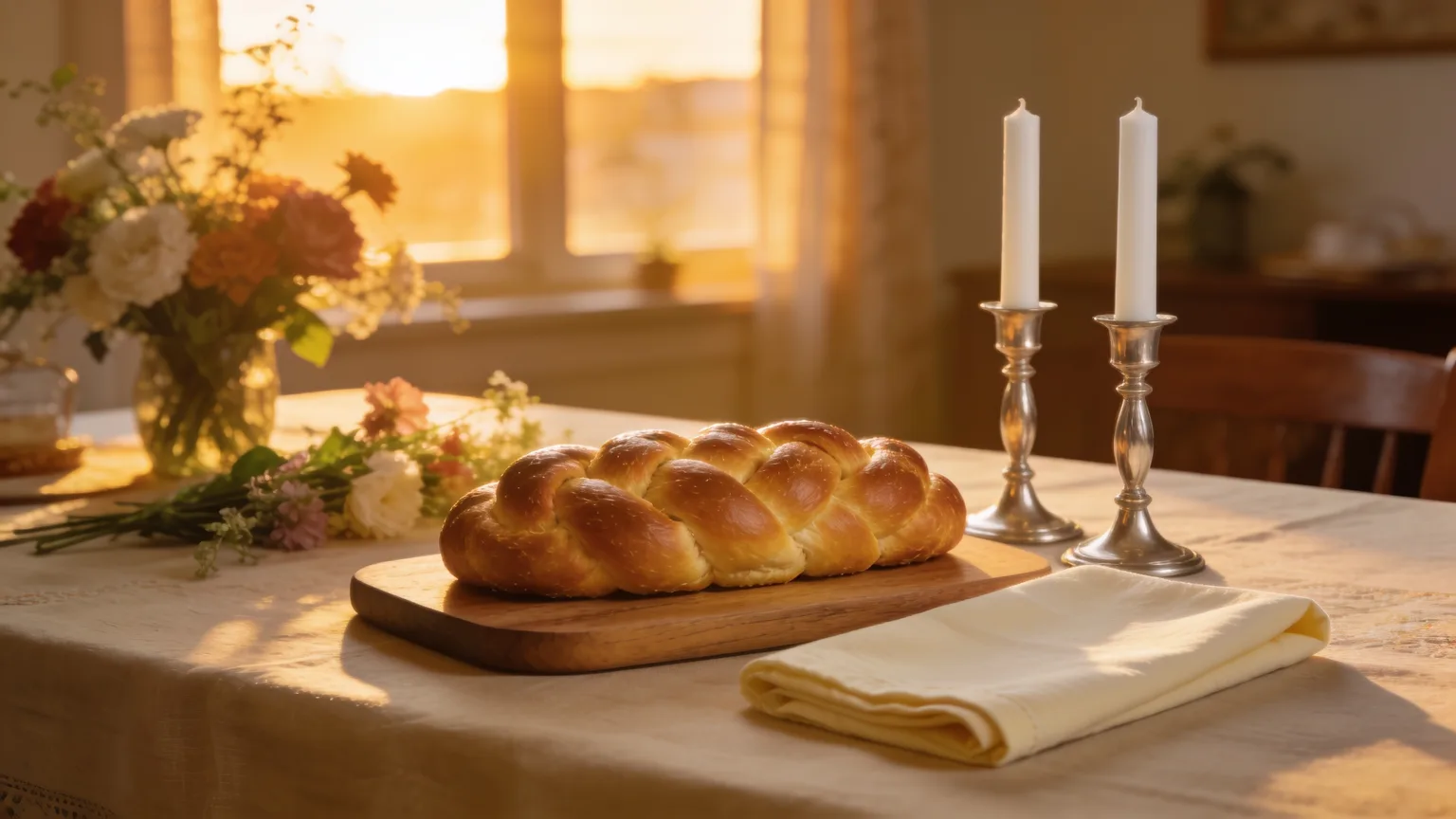
The challah is braided, the table is set, the guests are coming — every step of Friday deserves a song. Made early in the week, practiced by Thursday, and living in your kids' voices by the time the candles are lit.
5 free songs with every account · no credit card required
Hear real examples
Every track below was generated with this tool — press play, then make yours.
Every tot Shabbat leader and Jewish preschool teacher knows the Friday truth: the songs are the curriculum. Toddlers learn what Shabbat is by singing it coming — the challah song during Thursday baking, the cleanup song while the toys go away, the welcome song when families crowd into circle time with the babies on laps. And every parent knows the other Friday truth: the getting-ready rush — bath, clothes, table, doorbell — goes measurably better with a soundtrack the kids already know by heart.
This generator writes original Shabbat songs for kids from your prompt — your class's name, your family's rituals, your particular Friday. One thing to say clearly up front, because it matters: these songs are made and practiced before Shabbat. Generate on Tuesday, learn it from the MP3 through the week, print the lyric sheet Thursday night — so that when the candles are lit and the devices are away, the songs live where they belong: in your kids' voices, no speaker required.
From prompt to sung lyrics
The challah-baking song
Prompt: “A challah-baking song for kids — mixing, braiding, and waiting for the oven”
[Chorus]
Roll it, roll it, one two three, braid it like a crown,
Over, under, squeeze the ends, the best smell in the town,
Into the oven, watch it rise, golden through and through —
Shabbat is coming, challah's coming, and I helped make it too!
The Shabbat-is-coming cleanup song
Prompt: “A cleanup song for preschool — toys away, tables wiped, Shabbat is almost here”
[Verse]
Blocks in the basket, crayons in the cup,
Friday's getting closer so we're cleaning, cleaning up,
Wipe the little tables, push the chairs in tight —
Shabbat is coming soon, let's make our whole room bright!
Song ideas to start from
How it works
- 1
Describe your song
Type one sentence — the person, the story, the vibe — or start from an example above. Any language works.
- 2
Pick a style and length
Vocals or instrumental, any genre, from a 15-second hook to a full-length track. Or write every lyric yourself in the studio.
- 3
Generate, download, share
Your song renders in minutes with cover art and its own page. Download the MP3 or just send the link.
Tot Shabbat circle time
Tot Shabbat runs on songs with jobs: the welcome song that gathers wigglers onto the rug, the clapping number that burns off the energy, the wind-down that settles everyone for the story. Leaders cycle the same beloved set for years — which works, right up until you want a song that knows your community's name, your leader's name, and this year's particular crop of two-year-olds who only sit still for exactly one verse at a time.
Prompt a welcome song with your synagogue or program's name and the moves you want built in ("clap twice, stomp, sit down"), and generate it early in the week. Learn it yourself from the MP3 on the Tuesday commute, and teach it live on Friday morning — tot Shabbat is a sung-by-humans room, and the recording's job is to get the song into your head, not to play from a speaker. Within a month the families will be singing it in the parking lot, which is how you know a circle-time song has truly landed. If your program runs multiple age groups, regenerate the same welcome song at different tempos — the babies get the slow one, the runners get the fast one.
The Friday countdown: getting-ready songs
Friday afternoon with small children is a race — bath, clothes, table, challah, guests — and experienced parents know that a task with a song attached is a task that gets done. A getting-dressed song for the three-year-old who resists pants on principle. A table-setting song that names the candlesticks, the kiddush cup's spot, the good tablecloth that only comes out for Shabbat. A guests-are-coming song for the window watch, with a doorbell "ding!" the kids get to shout. Each one takes a minute or three to generate, so building the full Friday set is a single nap time's work.
The challah-baking song is the crown of the set: mixing, braiding, the unbearable oven wait, the smell that announces the day better than any clock. Make it once with your kids' names in it and it becomes the permanent soundtrack of your Thursday-night or Friday-morning bake, requested before the flour is even out, hummed through the braiding, and belted at the oven window during the rise. All of it plays and gets practiced before candle-lighting — by the time Shabbat arrives, the kids supply the music themselves, which was always the point.
A custom song about your family's Shabbat
Every family's Shabbat has its own fingerprint: Grandma's soup, the cousins who come every other week, the walk to shul in matching shoes, the blessing over the children that ends in a squeeze. A song about your Shabbat — names, rituals, the specific sweetness of your table — gives kids a picture of the day they are part of, teaches the rhythm of the evening without a single flashcard, and makes a genuinely lovely keepsake as the little voices that requested it grow up. Grandparents who join every other week deserve a verse; the soup deserves the chorus.
One boundary we hold on purpose: Shalom Aleichem, kiddush, and the blessings belong to tradition, and we honor them by never generating liturgy — not as covers, not as "new versions," not at all. Our songs are the ones around the edges: the challah song, the cleanup song, the who's-coming-to-dinner song, the quiet afternoon song. The sacred words stay exactly as your family has always sung them, and the new songs make a frame around that, never a replacement for it.
Quiet Saturday-afternoon songs for littles
Shabbat afternoon with toddlers is its own gentle country — the long lunch fades, the house goes quiet, and littles need soft songs for couch cuddles, stroller walks, and the slow slide toward a nap. Generate a slow, cozy song during the week, sing it enough times that it sticks to you, and print the lyric sheet for the older kids who like following the words. On Shabbat itself the device stays away; the song is already yours, sung a cappella into someone's hair in the quiet, which is the best possible production value.
That is the design of this whole page, really: songs made Tuesday, practiced Thursday, owned by Friday night. The printable-lyrics habit is the one tot Shabbat leaders and observant parents swear by — paper works on Shabbat, a lyric sheet on the table invites the guests in, and a song your family sings unplugged is a song your kids will remember singing for the rest of their lives. The generator makes the track; the family makes the tradition — and a year from now, when the kids start the countdown song unprompted while setting the table, you will not remember which came first.
Frequently asked questions
Can we play these songs on Shabbat itself?
That is a question for your family's practice — many observant families keep devices away once candles are lit, which is exactly why these songs are designed as before-Shabbat songs. Generate early in the week, practice from the MP3, print the lyrics, and by Friday night the song lives in your voices, no speaker needed. Families with a different practice can simply press play.
Does it generate Shalom Aleichem or the blessings?
No — and that is a deliberate line, not a limitation. The blessings and the Shabbat table liturgy belong to tradition and to your family, sung the way they have always been sung. We write the songs around them: the challah song, the cleanup song, the countdown to candle-lighting, the quiet afternoon song.
Can the song include our class or family name?
Yes — "the Katz family Friday countdown" or "Morah Dina's cleanup song" is exactly the kind of specificity that makes kids light up and makes the song theirs. Names typed by a parent or teacher are simply song content, and every song is private by default unless you choose to publish it.
Is it free to make one?
Every new account includes 5 free songs, no credit card required. After that, songs cost 5 credits each — the welcome song, the challah song, and the cleanup song all fit inside the free five, with room left to remake a favorite. Publishing a song to the community is optional and earns a free song, though most family songs stay private.
How fast can I make a song before Friday?
One to three minutes per song, so even a Thursday-afternoon idea makes the deadline. That said, the songs work best generated early in the week, with a few days of practice runway before Shabbat arrives — Tuesday's song is Friday's tradition, and the extra rehearsal days are what turn a recording into a family's own a cappella number.
Can it include Hebrew words?
Yes — transliteration-first is how kids' Shabbat music actually works in most American classrooms, so "challah," "Shabbat shalom," and "kiddush cup" sing naturally when written phonetically in the prompt. Ask for bilingual English-Hebrew verses if your program wants both languages sharing the chorus — any language is supported, so grandparent-language lines are welcome too.
Can the song be in my voice — or the teacher's voice?
Yes — Your Voice mode performs the song in the adult's voice from about fifteen seconds of talking (no singing needed, 10 credits), and the voice clone is deleted automatically after the render. A cleanup song in the teacher's own voice gets remarkable compliance from three-year-olds. It is always the adult's voice, never a child's, and the song stays private by default.
Do these songs teach kids what Shabbat is?
They help the way songs have always helped — melody makes the words and the rhythm of the day easier to remember, which is why tot Shabbat runs on music in the first place. The honest claim is a modest one: a good song supports what parents and teachers are already teaching, verse by verse, Friday by Friday.
Can I print the lyrics?
Yes — every song has its own page with the full lyrics, easy to print as a lyric sheet for the table or the classroom wall. That is the recommended Shabbat workflow: the paper comes to the table, the device does not, and the guests can join in on the chorus.
What styles fit Shabbat songs for kids?
Warm acoustic folk for the countdown and the quiet afternoon, bouncy singalong for cleanup and challah-baking, and gentle lullaby textures for the littlest listeners winding down. Describe the moment in your prompt — "sleepy," "racing the clock," "flour everywhere" — and the style follows the scene. Songs run from 15 seconds to several minutes, so a tiny transition jingle and a full circle-time number are equally easy to make.
Takes about a minute to start. 5 free songs included.