


Sweet New Year Songs
Rosh Hashanah Songs for Kids
Apples dipped in honey, the shofar's big wake-up blast, a table full of wishes — the sweetest unit of the Jewish preschool year deserves songs with your class's name in them.
5 free songs with every account · no credit card required
Hear real examples
Every track below was generated with this tool — press play, then make yours.
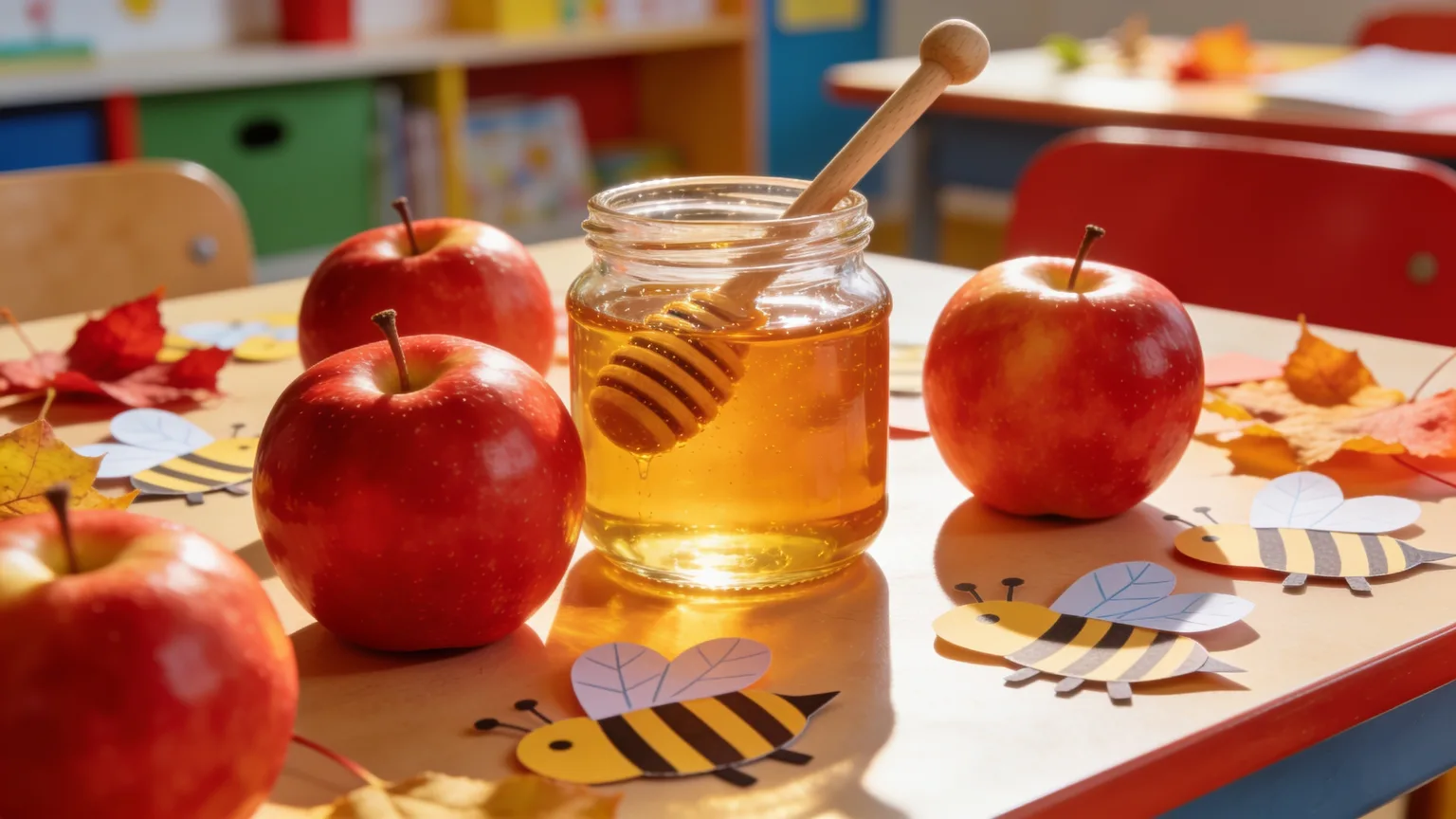
September in a Jewish preschool has a flavor, and the flavor is honey. The apples-and-honey tasting table, the round challah, the paper shofars drying on the craft rack, the whole room practicing "shanah tovah" on every visitor who dares walk in — Rosh Hashanah is the year's first big unit, and like every great early-childhood unit, it runs on songs. Teachers reach for the classics, and then reach for one more: a song that knows this class's name, this teacher's name, this September's particular sweetness.
This generator writes original Rosh Hashanah songs for kids from a simple prompt — the apples-and-honey number with your class sung into the chorus, the shofar song with all three calls given their moment, the family song of round-the-table wishes with one line per kid. Songs take one to three minutes to make and arrive finished, with cover art, an MP3 download, and a shareable song page. And because the holiday itself is a devices-away day for many families, everything here is built for the sweet, loud, sticky weeks of practice before it.
From prompt to sung lyrics
The apples-and-honey circle song
Prompt: “An apples-and-honey circle-time song for Morah Dana's class, wishing everyone a sweet new year”
[Chorus]
Dip the apple in the honey, pass the plate around,
Morah Dana's class is wishing sweet for everyone in town,
Shanah tovah, shanah tovah — say it loud and clear,
Sticky fingers, happy faces — what a sweet new year!
The shofar song
Prompt: “A playful shofar song for preschool — tekiah, shevarim, teruah, and one giant final blast”
[Verse]
Tekiah! One long mighty blast to wake the sleepy year,
Shevarim goes three broken notes — can everybody hear?
Teruah, nine quick tiny beeps, as fast as fast can be,
Then hold your breath for the great big one… and count it out with me!
Song ideas to start from
How it works
- 1
Describe your song
Type one sentence — the person, the story, the vibe — or start from an example above. Any language works.
- 2
Pick a style and length
Vocals or instrumental, any genre, from a 15-second hook to a full-length track. Or write every lyric yourself in the studio.
- 3
Generate, download, share
Your song renders in minutes with cover art and its own page. Download the MP3 or just send the link.
Apples and honey: the flagship circle-time songs
If the Rosh Hashanah unit has an anthem, it is the apples-and-honey song — and a custom one, with your class's name and your teacher's name in the chorus, turns the September tasting table into a full production number. Prompt it with the details that are true of your room: who passes the plate, the sticky-fingers problem that no amount of wipes has ever solved, the "shanah tovah" the kids are practicing on every grown-up within range. Specificity is what separates a song the kids sing from a song the kids own — and by the second week of Elul, owning it is exactly what they will do, complete with choreography nobody taught them.
Teachers use the song three ways: at circle time through the unit, at the family open-house where parents finally hear what the kids have been humming for two weeks, and as the song page link sent home so the chorus follows the class into their kitchens and car seats. The melody carries the vocabulary — apples, honey, shanah tovah, round challah — the way circle-time songs always have. Melody helps memory; that is the honest, modest claim, and for a room of four-year-olds it is more than enough.
Shofar songs: tekiah, shevarim, teruah
Nothing in the preschool Jewish year competes with the shofar for pure kid excitement — it is a trumpet made from a ram's horn, it is gloriously loud, and somebody gets to blow it. A shofar song leans into all of that: the three calls as characters (tekiah the long steady one, shevarim the three broken ones, teruah the nine quick beeps), a big held-breath moment before the final blast, and explicit permission to be loud on the response, which is the part preschoolers respect most in any song. Add a hand motion per call — long arm sweep, three chops, nine tiny claps — and the whole thing becomes a full-body memory.
Keep it playful on purpose — the shofar service itself belongs to the synagogue and to tradition, and these songs never touch the liturgy. Ours is the classroom warm-up: the song that means kids arrive at the holiday already knowing the calls by name, bouncing in their seats to hear the real thing and ready to whisper "that one was tekiah" to whoever is sitting closest. Prompt "playful, bouncy, with a count-along ending" and let the class supply the teruah themselves.
A sweet-new-year song for your family
Rosh Hashanah dinner has a built-in songwriting prompt sitting right on the table: wishes. Ask each kid what they hope for in the new year — a bike, a baby cousin, third grade being nice, the dog learning one single trick — and put the answers in the prompt exactly as they said them. Out comes a family song of round-the-table wishes, one line per kid, names included, the silly hopes and the sweet ones side by side the way they are in real life.
Families make it in the week before the holiday and play it during the apple-slicing and the honey-cake baking; by the time candles are lit and the devices are put away, everyone knows their own line and delivers it on cue at dinner. Remake it every Elul and you have started something better than a keepsake — a year-over-year archive of what your kids wished for at five, at six, at seven, in a song they will beg to hear again next fall and be mortified by, wonderfully, at fifteen.
The fall holidays come fast: from Rosh Hashanah to Sukkot
Every Jewish educator knows the September sprint: Rosh Hashanah, then Yom Kippur's quiet, then Sukkot arrives with lulavs and a hut going up in the playground — three units inside a month, each needing fresh circle-time material while the glue sticks from the last one are still drying. A custom song per week keeps the run from blurring together: the apples-and-honey song, then a gentle new-start song for the quieter days, then it is time for sukkah-building and lulav-shaking numbers.
The prompt-to-song workflow is built for exactly this pace — a teacher can generate the next week's song during Sunday planning, learn it Monday, and have the class carrying it by Wednesday. When the calendar turns, head to the Sukkot songs page and keep the streak going; the kids, by October, will simply assume every holiday comes with its own song written about their class. They will be right, and someday they will be startled to learn other classrooms lived differently — that somewhere out there, circle time happened without a song that knew everyone's name.
Frequently asked questions
Can the song include my class's name?
Yes — that is the difference between a Rosh Hashanah song and your Rosh Hashanah song. Put the class name, the teacher's name, or every student's name in the prompt and they are sung into the verses; a full roster makes a wonderful wish-list verse. Songs are private by default, and names a teacher types are simply song content.
Is it free to make one?
Every new account includes 5 free songs, no credit card required. After that, songs cost 5 credits each — enough free runway for the apples-and-honey song, the shofar song, and the family wishes song, with room to regenerate the winner. Publishing a song to the community is optional and earns a free song, though most class and family songs stay private.
How fast can I make a song for the September unit?
One to three minutes per song. A teacher can generate three candidates during planning period, pick the best, and have the class singing it at the next circle time. Every song includes cover art, an MP3 download, and its own shareable page for the family newsletter.
Can it teach the shofar calls?
A song that names tekiah, shevarim, and teruah — and gives each one a sound, a length, and a gesture — makes the calls much easier for kids to remember, because melody helps memory. That is the whole reason circle time is sung. Modest claim, honestly made: it is a great warm-up, and the real shofar does the rest.
Does it generate the holiday liturgy or blessings?
No — the shofar service, the blessings, and the synagogue's music belong to tradition, and we leave them there deliberately. These are original celebration songs for the classroom and the kitchen: apples, honey, wishes, round challah, and one very exciting ram's horn.
Can we play the song on Rosh Hashanah itself?
Many families put devices away for the holiday, so these songs are designed for the weeks before: circle time, car rides, the honey-cake bake. Print the lyric sheet from the song page and the singing carries into the holiday unplugged — which, for a song the kids already know by heart, is the best version anyway.
Can it include Hebrew like "shanah tovah"?
Yes — transliterated Hebrew sings naturally and is how American kids' holiday music has always worked, so write it phonetically in the prompt. "Shanah tovah u'metukah" makes a lovely hook, and bilingual English-Hebrew verses work beautifully for classrooms teaching both. Any language is supported, so grandparent-language lines are welcome at the wishes table too.
Can the song be in my voice?
Yes — Your Voice mode performs the song in the teacher's or parent's voice from about fifteen seconds of the adult talking (no singing needed, 10 credits). The voice clone is deleted automatically after the render and the song stays private by default. It is always the adult's voice — never a child's — and a wishes song in Mom's voice becomes a family heirloom fast.
What about Yom Kippur and Sukkot — can I keep the songs coming?
Yes, and the fall calendar rewards it: one custom song per week keeps circle time fresh through the whole holiday run instead of stretching one unit thin across a month. Sukkot is the natural next stop — building songs, lulav-shaking songs, decorate-the-sukkah numbers — and the Sukkot songs page picks up right where this one leaves off.
What styles work for kids' Rosh Hashanah songs?
Bright singalong pop for apples and honey, a bouncy march for the shofar song, and warm acoustic for the family wishes song at the dinner table. Describe the moment and the energy in your prompt — "gentle," "loud and giggly," "cozy dinner-table" — and the style follows the scene you set. Songs run from 15 seconds to several minutes, so a quick shanah-tovah greeting jingle is as easy as the full circle-time anthem.
Takes about a minute to start. 5 free songs included.